.png)
.jpg)


A successful planting season is all about getting off to a strong start. The right seed. The right population. The right conditions. When it comes to reducing pinch row loss, not all planter adjustments carry the same impact. Recent research from Precision Planting shows that how you manage your planter’s tire pressure and weight distribution can both make a measurable difference. But optimizing tire pressures may be the winner when you’re looking to make the biggest impact on your yields.

Today’s Planters Are Bigger and Heavier Than Ever
There’s no question that modern planters have improved efficiency. Central-fill systems, larger tanks, and wider bars mean fewer stops and more acres covered in a day. But that efficiency comes with a tradeoff: more weight concentrated into fewer contact points.
Instead of smaller, evenly distributed loads like older box planters, today’s planters carry thousands of pounds over the center of the bar and its main transport tires. That weight has to go somewhere—and it goes straight onto (and into) your soil.
There are a lot of factors to think about when setting up your planter for peak performance. Because of a planter’s considerable weight—and the fact that soil is often at its most sensitive during planting—this is prime time for destructive compaction.
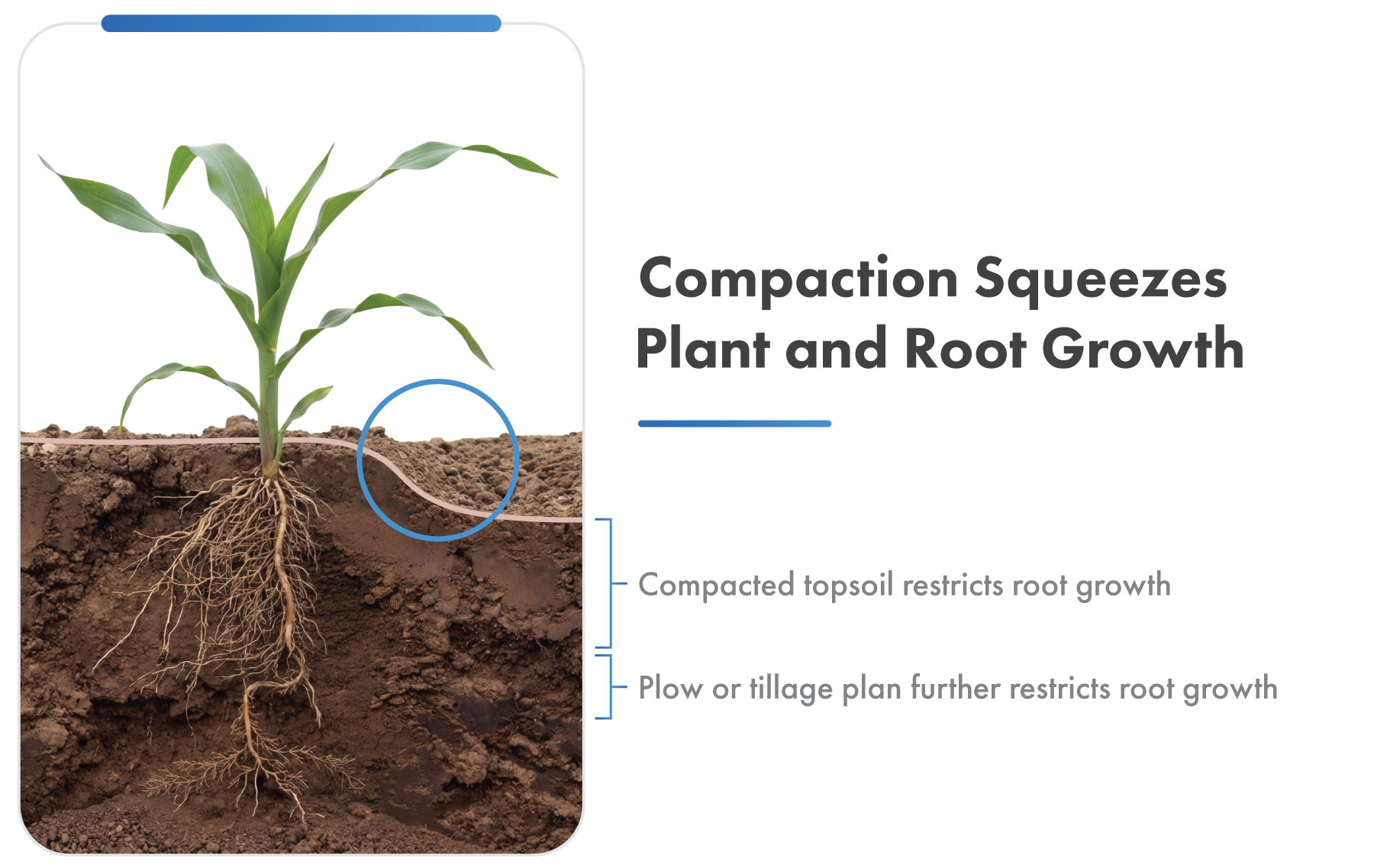
If roots encounter dense, compacted soil early, they adapt and try to grow away from the problem. This limits access to water and nutrients during the most critical phases of crop development. So, it’s important to take steps to minimize the severity of pinch row compaction.
What Precision Planting Set Out to Understand
In 2024 and 2025, Precision Planting took a closer look at how planter setup influences field performance. Specifically, they tested two variables using a Fendt® Momentum™ planter’s Load Logic System:
- Weight distribution. Would there be a positive yield effect from using the planter’s distribution system to spread its weight more evenly across the bar?
- Tire pressure. The study compared typical operating pressures to lower, field-optimized tire pressures.
Both concepts are straightforward. But what makes this study interesting is how they evaluated them: individually and together.
Read the Original Study from Precision Planting: Weight Management and Tire Inflation Study
The Study’s Result: It’s Not One or the Other
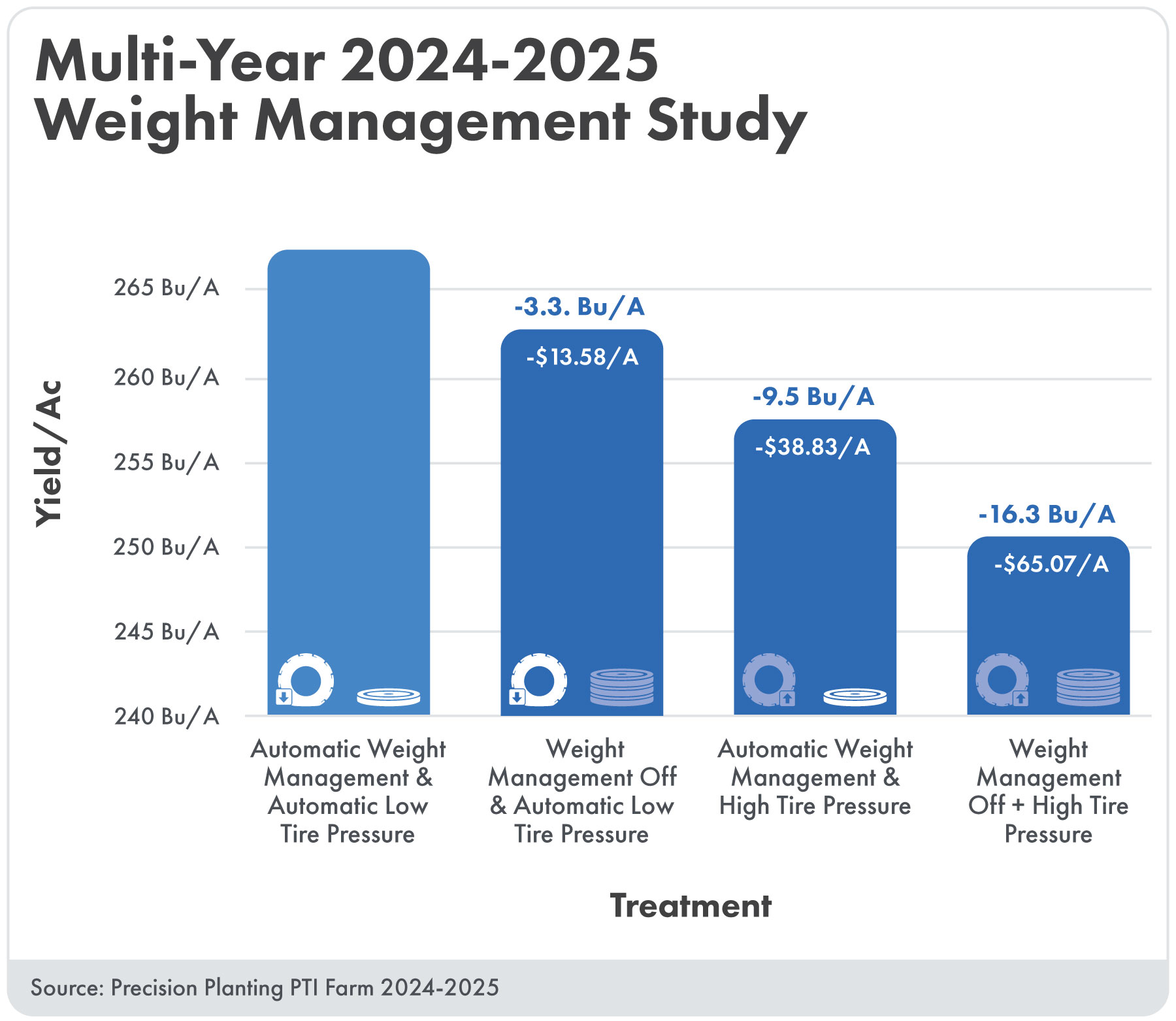
The best performance came from combining weight distribution with lower tire pressure. Not just one adjustment. Not just one system. Both working together. In fact, the highest-performing setup in the study—using both improved weight distribution and lower tire pressure—reached approximately 267 bushels per acre.
Which Technology Made a Bigger Difference?
If you only made one change, where would you see the biggest return? When Precision Planting isolated each factor, both made a difference.
Looking deeper into the study data, a change from high tire pressure to low tire pressure resulted in a 13-bushel gain on its own (from roughly 250 to 263). Weight management added an additional 4 to 7 bushels, depending on the setup.
Based on this study, optimizing the tire pressure had the bigger impact. However, the best result came from stacking both CTIS and weight distribution technologies.
Why Lower Tire Pressure Means Higher Yields
Tire pressure directly determines how hard your planter is on your soil. When tires are inflated to higher pressures their footprints stay small and your planter’s weight is concentrated into a smaller area.

But, if you lower your tire pressures, the tires will flex more and their footprints will lengthen. A larger overall footprint on the ground means that your planter’s weight is more evenly distributed across the surface. The ultimate difference is hidden beneath your boots—less compaction and more pore space for air and water, which encourages stronger early root development. You’re giving your crop its best start possible.
Why Weight Distribution Adds More Bushels
Precision Planting’s study took advantage of the Fendt Momentum’s hydraulic weight distribution capabilities to show that layering technologies can bring additional agronomic benefits. Without a system to balance the planter’s weight, certain rows—especially under the center of the planter—carry a disproportionate load. That’s where problems start: overloaded zones, uneven soil density, and reduced emergence consistency.
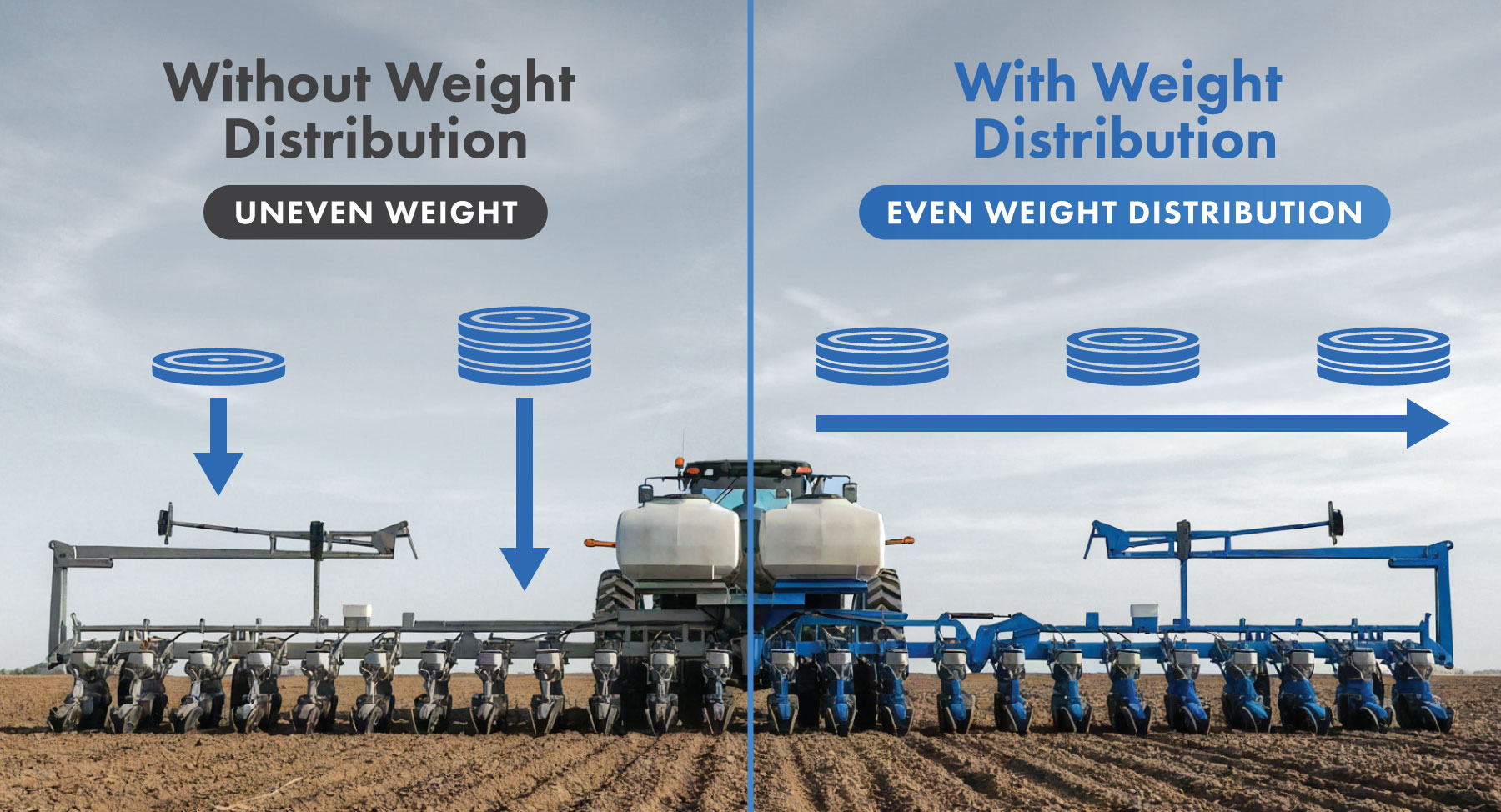
A weight distribution system helps spread that load across the entire planter width, creating more uniform ground pressure and fewer problem areas, leading to more consistent crop development across every row.
Bigger Equipment Has Changed the Rules
Farm machinery continues to grow larger and heavier. Will it reverse course and transition to multiple smaller machines moving autonomously across fields? Maybe. That’s a long way into the future for wide adoption at this point. Today, the main problem is this: What used to be a minor inefficiency with smaller equipment has now turned into measurable yield loss with every pass. That’s why your planter’s tire setup should be focused on maximizing its footprint above all else.
In 2020, we undertook our own planter tire pressure study. Would lower tire pressures at planting time translate to higher yields come harvest?
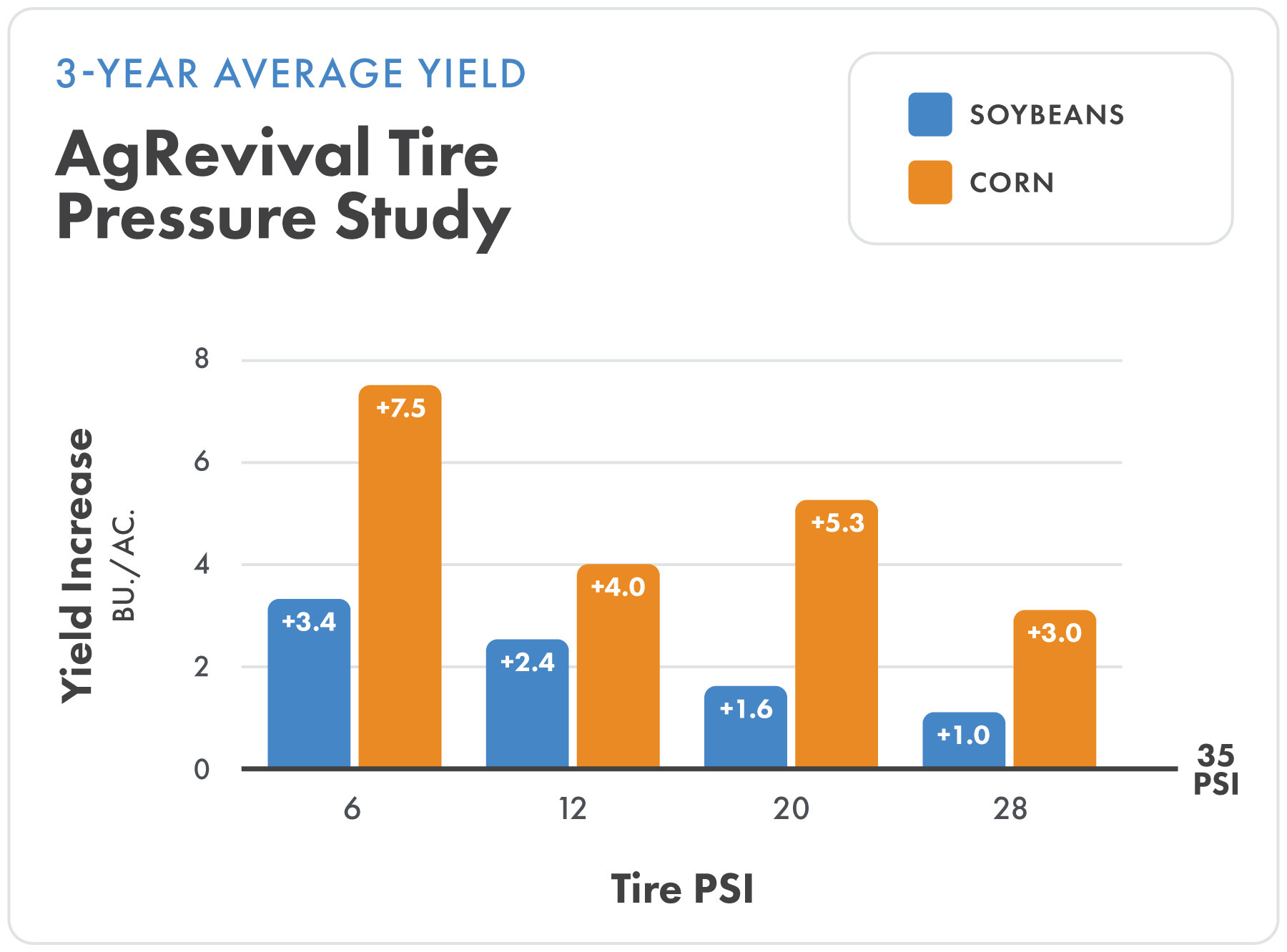
Our study told the same basic story: Lower your tire pressures on your planting setup and you’ll see higher yields.
Read More: Lower Tire Pressure, Higher Yields: Results from a Three-Year Research Study
There’s one Real-World Problem that You Need CTIS to Overcome
So why doesn’t everyone just run ultra-low tire pressures in the field? The problem is, you have to transport your equipment to get there, sometimes for many miles. And you can’t run low field tire pressures on the road. Do that and you’re going to have a blowout. So you’re forced to inflate your planting setup’s tires for the worst-case scenario (road travel) or you might try to set a “compromise” pressure between ideal road and field pressures to "get by."
Unless you have CTIS.
A Central Tire Inflation System Puts You In Control
When you outfit your planter and planter tractor with CTIS, you will have the full control you need to boost your yields. You can set optimum tire pressures for both road travel and field work at the touch of a button from your tractor seat. No compromises or unsafe situations necessary.
With optimum road tire pressures, you’ll:
- Travel faster.
- Save fuel.
- Ride better.
- Save money on tires.
With optimum field tire pressures, you’ll:
- Create less compaction.
- Minimize stunted, slower-emerging crops.
- Work faster.
- Save money on fuel.
Learn More: Why You Need a Central Tire Inflation System for Your Planter
To get the most out of a system, you’ll want to start with VF-rated radials, which are able to run at up to 40% lower tire pressure as compared to standard radials while carrying the same load. To protect your bottom line, all of your farm’s largest machines should be rolling on VF tires. Even without CTIS, VF tires will get you more traction, more load capacity, and more flotation!
Squash Soil Compaction to Drive Your Farm Forward
We’ve shared this same thought again and again over the years—soil compaction is the #1 profit-stealing problem we see on farms today. As with any technology, the initial investment can seem steep . . . until you consider the potential ROI.
Is CTIS a good move for your farm? What should you equip first? Planter? Sprayer? How many more bushels will you be able to add to your bins if you take steps to squash compaction? Our tire experts can help you find the Right Tire System™ for your entire farm, which may include CTIS. Share some information about your farm, and we’ll be able to tell you just how quickly a central tire inflation system will Drive Your Farm Forward.
References
You may also like...