.png)
.jpg)


After the Quadtrac ushered in the modern era of farm tracks in 1992, many farmers came to view tracks as the ultimate solution for traction and soil protection. At the time, this was probably true. But today, with modern VF tire technology and central tire inflation systems (CTIS), the math has changed. When you consider the differences in initial cost, maintenance costs, fuel efficiency, and soil compaction potential, the safe bet is now on VF tires and CTIS.

Tracks vs. Tires: A Shifting Financial Advantage
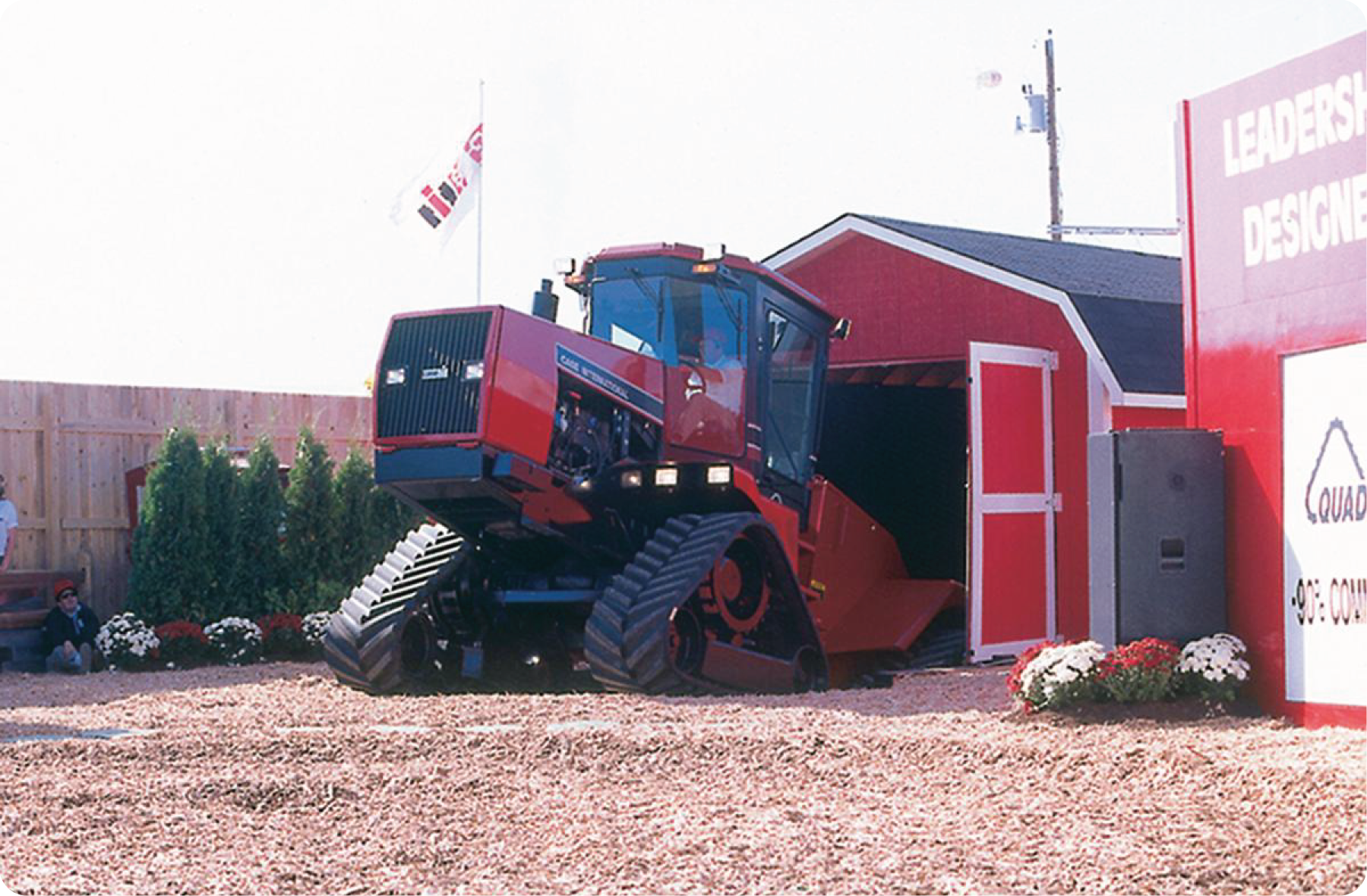
The tracks vs. tires debate has long centered around traction and soil compaction. After the Quadtrac ushered in a new era of pulling power on the farm in 1992, tracks soon became widely viewed as far superior to tires. Tracks didn’t gain popularity because of marketing alone: tracks addressed real limitations in how farmers ran their tires.
At the time, some farms still ran bias ply tires on their tractors—even on machines tasked with the farm’s heaviest pulling duties. The radial tires of the day were no match for the huge footprints that tracks could put down. The tire setups were narrower and, similar to today, the tires themselves were often overinflated in the field, which resulted in tiny footprints, high wheel slip, rutting, and poor performance in general.
VF Tires and CTIS: Outpulling Tracks on the Balance Sheet
Very high flexion (VF) tires, especially when paired with a central tire inflation system (CTIS), have changed the landscape when it comes to traction on the farm. Together, they allow farmers to:
- Run high tire pressures on the road for fast transport.
- Run ultra-low pressures in the field for maximum footprint.
Here’s what’s different today: farmers are no longer stuck with overinflated tires in the field. Tires can still trounce tracks on the road when it comes to speed and wear, plus they can now approach the pulling power and fuel efficiency of tracks in the field.
This isn’t about picking the ultimate winner in a pulling showdown. High input prices and volatile commodity prices require farms to be smarter about rubber. Why? Because overall, the math has to pencil out in favor of your farm. That’s how you determine the real winner in the tracks vs. tires debate.
There isn’t a convincing agronomic argument for tracks either. Both tracks and tires have the ability to cause frightening amounts of soil compaction. In reality, axle load is the #1 factor responsible for deep soil compaction, and tracks definitely don’t shine here, either, with the average track machine weighing in at 20–30% heavier than a comparable wheeled tractor.
How VF Tires and CTIS Close the Track/Tire Performance Gap
VF radials can carry the same load as a standard radial at up to 40% lower air pressure. What’s the big deal? A bigger (longer) footprint. In practical terms, this delivers:
- Reduced ground contact pressure.
- More bars on the ground for increased traction efficiency.
- Greater flotation.
However, VF construction alone is only part of the equation. You have to think about air pressure as well. Without a central tire inflation system, you have to set your tire pressures for the worst-case scenario—road travel. Running ultra-low pressures on the road will lead to fast tire wear and potentially catastrophic failures.
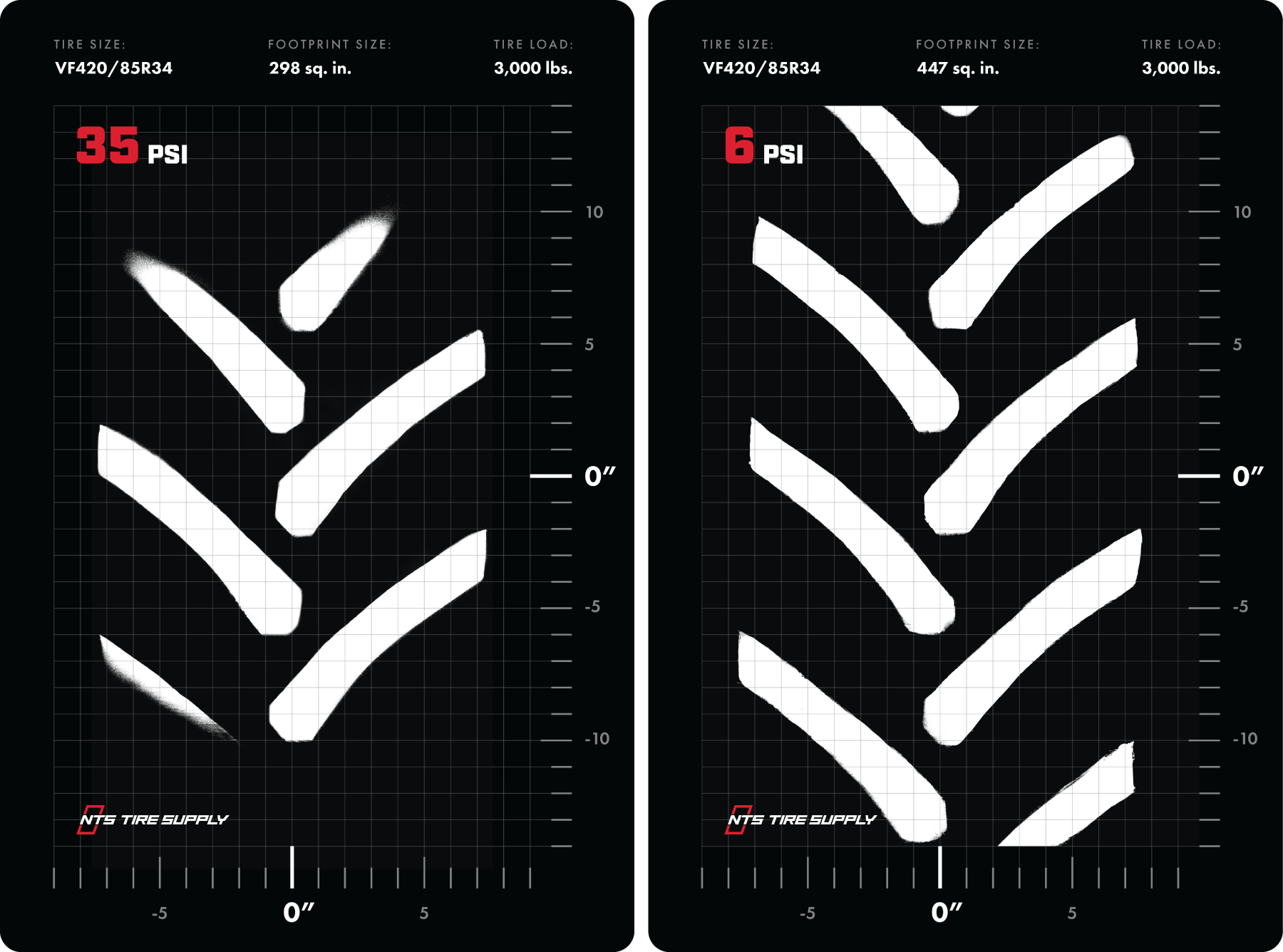
How about picking a “compromise” tire pressure between road and field pressure? Well, then you’re losing out on the road and in the field. To truly take advantage of VF tire technology, you need the ability to vary your tire pressures based on load and speed. This is where central tire inflation systems (CTIS) are key. With CTIS, you can:
- Reduce tire pressure in the field to match axle load and soil conditions.
- Reinflate for road travel to protect your tires.
- Maintain optimal pressure always.
At ultra-low pressures, VF tires can rival the low slip numbers that tracks can run during heavy pulling. And this is why tires have been able to narrow the once considerable performance gap with track systems.
The Numbers Don’t Lie: Tracks are Expensive
Let’s take a closer look at how VF tires and CTIS will get you close to track performance for way less than track money. For this comparison, we hopped on to caseih.com to build a couple of Steigers: a 645 Quadtrac and a 645 Wheeled tractor.
Initial Purchase Price
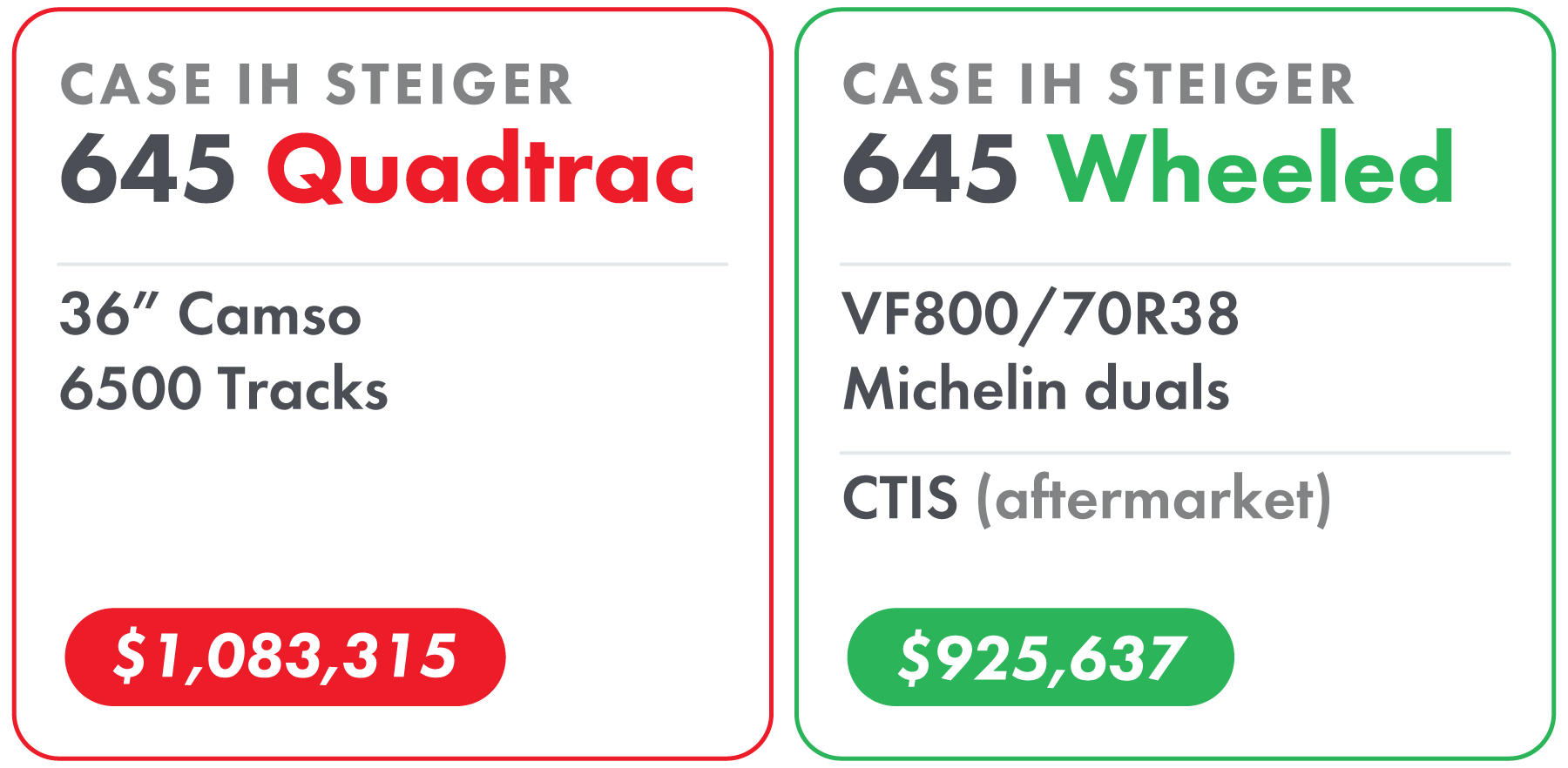
VF Tires + CTIS save you $157,678 out of the gate. That’s a significant chunk of change in today’s landscape of high inputs and low or volatile commodity prices. But the financial pain for tracks doesn’t stop there.
Maintenance
If you keep your tractors around long enough to need replacement belts/tires, a track machine will once again find itself running in the red when compared to a wheeled tractor.
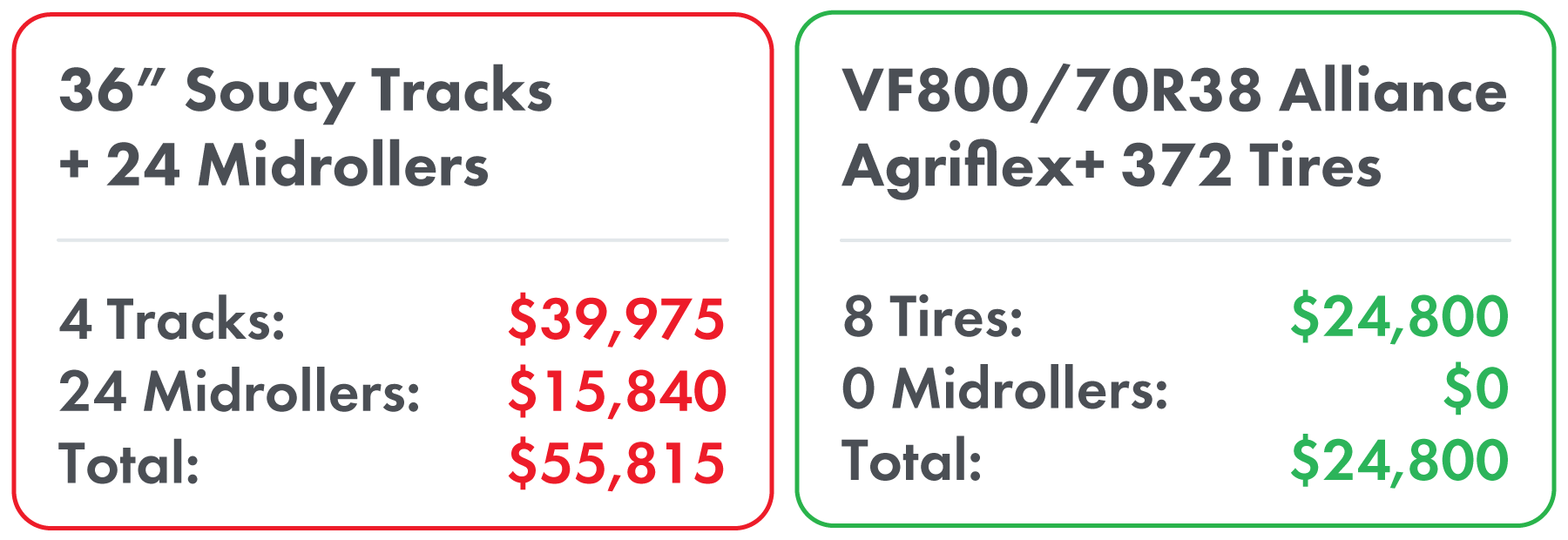
VF Tires can save you over $31,000—or 55%—at replacement time. This is a real-world example of what we would recommend when replacement time comes around for our two high-horse example tractors. On the track side we went with high-quality replacement belts. For the imaginary wheeled tractor, we chose a tire we commonly recommend in this situation. The Alliance 372s aren’t the most expensive tires on the market, but they offer high-end performance at an attractive price.
“No fair” you say, “you added midrollers!” Absolutely! Want to know what will happen to your track warranty when you don’t replace your midrollers when they’re due? It goes up in smoke, just like tracks do on the road.
Tracks May Have a Fuel Economy Advantage. But How Much?
A few years ago The Ohio State University did some field testing comparing two Case IH Steiger 580s. With APM (Auto Productivity Management) enabled, operators pulled a tillage implement at a lighter and heavier drawbar load to compare the fuel consumption of a wheeled vs. track tractor.
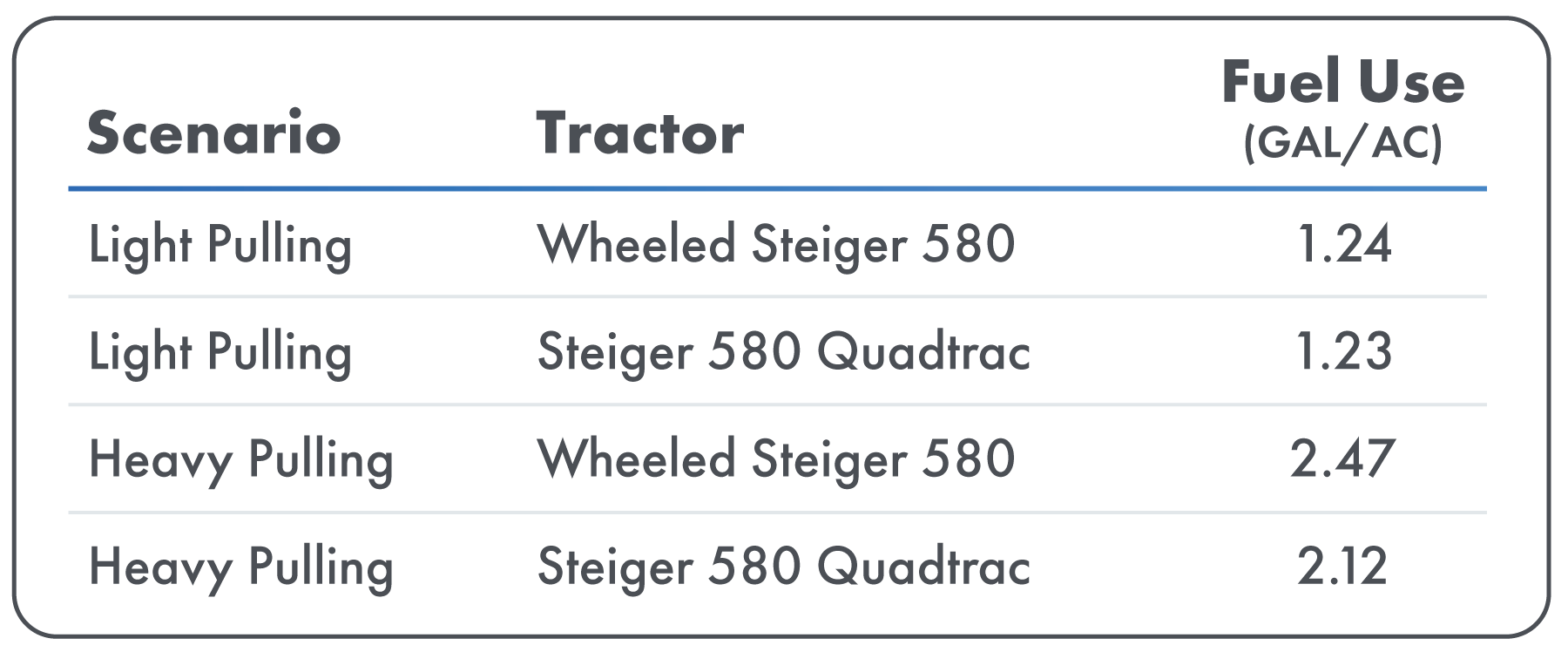
As you can see, when drawbar load increases, tracks start to pull away from tires in the fuel economy and productivity department, thanks to their huge footprint and near-zero slip. But what does that advantage actually look like when you factor in the difference in initial purchase price from our example above? Remember: tracks have a $157,678 hole to climb out of.
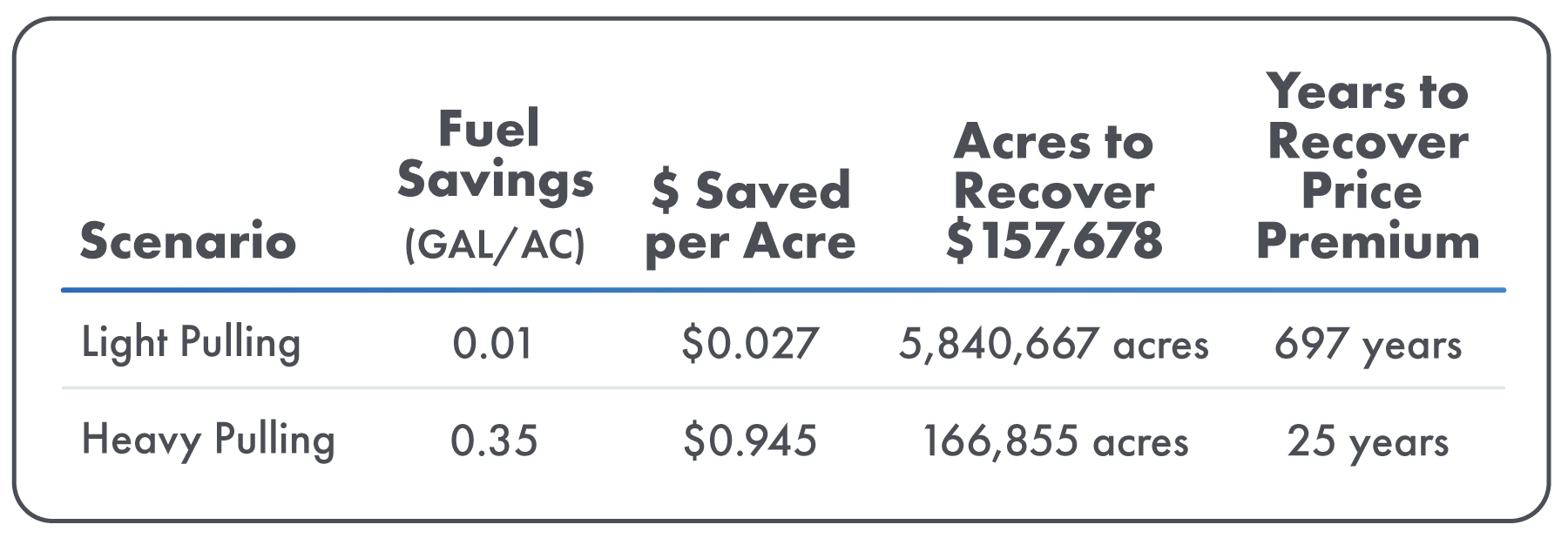
For this chart, we used a diesel price of $2.70 and assumed 500 hours of use per year. As you can see, in our example, the track payoff is rather slow!
Would Tracks Really Take 697 Years to Pay Off?
The scenario that we’ve run here is just one example. Get a deal on a track machine, close the initial purchase price gap, and pretty soon the bump in fuel economy and productivity could start to pay off a sooner. (You’ll still pay more for maintenance with a track system due to the undercarriage components, etc.)
A couple of other small studies have looked at this issue. In one study, Titan/Goodyear pitted a John Deere 9620R with LSW1400/30R46 super singles against a 9620RX and found that fuel economy was within a few gallons per hour in the tires’ favor (28 vs 31 gallons per hour).
Titan/Goodyear also put a Case IH 580 Steiger Wheeled tractor, again with 1400 LSWs, up against the Quadtrac version with 30” tracks and found the pair to be a draw when it came to pulling in the field. Both were able to maintain a speed between 6.2 and 7 miles per hour. The tracks slipped slightly less: 0–6% compared to 0–9% for the tires. The test was essentially a wash.
This is why it’s difficult to recommend tracks unless a farm’s unique needs make them absolutely necessary. As we mentioned earlier, VF tires have closed the performance gap between tires and tracks to the point where the math generally works out in favor of tires.
Tire Pressure is Key to Top Performance
Tire pressure is the critical element that makes track-like tire performance possible with VF tires. If someone ran any of the studies we’ve referenced above with overinflated tires, the track machines would have been ahead by a mile. Soil compaction is another way to illustrate how bad overinflated tires are in the field.
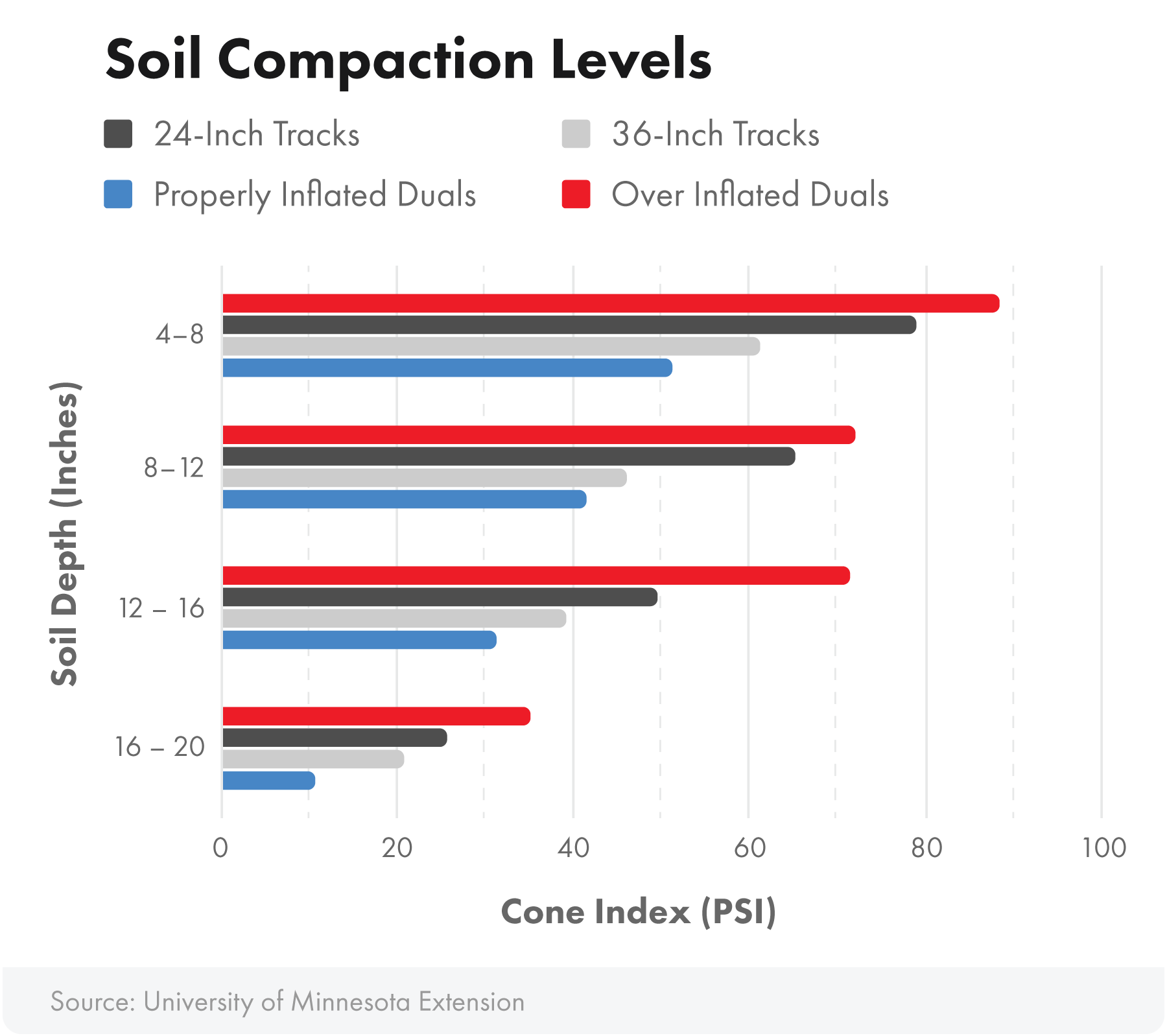
Notice how overinflated duals (at road pressure) were the worst by a long shot. But also notice how the properly inflated duals were better for soil compaction than even tracks with their huge footprints. Tracks don’t distribute their weight evenly across their footprints, and track machines are generally 20–30% heavier than their wheeled counterparts to boot.
What does this all mean? Footprint is king. No matter your tire setup, you need the largest footprint possible in the field for optimum performance and soil protection. And you get the largest footprint by running the lowest pressure that’s safely possible in the field.
VF Tires and Central Tire Inflation Boost Your Productivity
Can tracks still be the right answer for some applications on some farms? Sometimes. However, the case for tracks in every high-load, high-demand application is no longer as clear cut as it used to be. When you consider the initial capital cost, replacement expenses, and modern performance data, tracks’ once wide advantage has narrowed considerably.
At the same time, in order to get the most out of the tires on your farm’s high-horsepower tractors and other profitability-driving machines, you need the Right Tire System™: the right tires set at the right pressure(s) for the job at hand. VF tires are a great start, but a central tire inflation system is necessary in many cases to get the most out of your tires. Together, the right tire technology will Drive Your Farm Forward and protect your bottom line.
References
You may also like...